



For Immediate Release: For more information call U.S. contact M. Samuel Anderson
at 956-520-0143 in Texas, or email Ontario, Canada contact Dr. Oliver Heydorn at This email address is being protected from spambots. You need JavaScript enabled to view it.
Trump’s Tariff Dividend Idea Shows Some Promise
Douglas Institute sees relevance to its
namesake’s principles for repairing
the economy’s massive defects
The Clifford Hugh Douglas Institute is announcing its increased efforts to reach out to media, government, academia and other entities to share the Institute’s unique and timely analysis regarding current economic, political, social issues in the context of Social Credit Economics.
Social Credit Economics stems from the financial and monetary discoveries and insights of the late Clifford Hugh Douglas, the Institute’s namesake. Douglas (1879-1952), a widely successful British-born engineer, wrote a number of books, newsletters, spoke at major conferences, addressed the public on BBC radio, and also addressed government panels about economic philosophy. He recommended key measures to repair grave defects in the economic system and apply innovative solutions to enable the economy to flourish for the benefit of all.
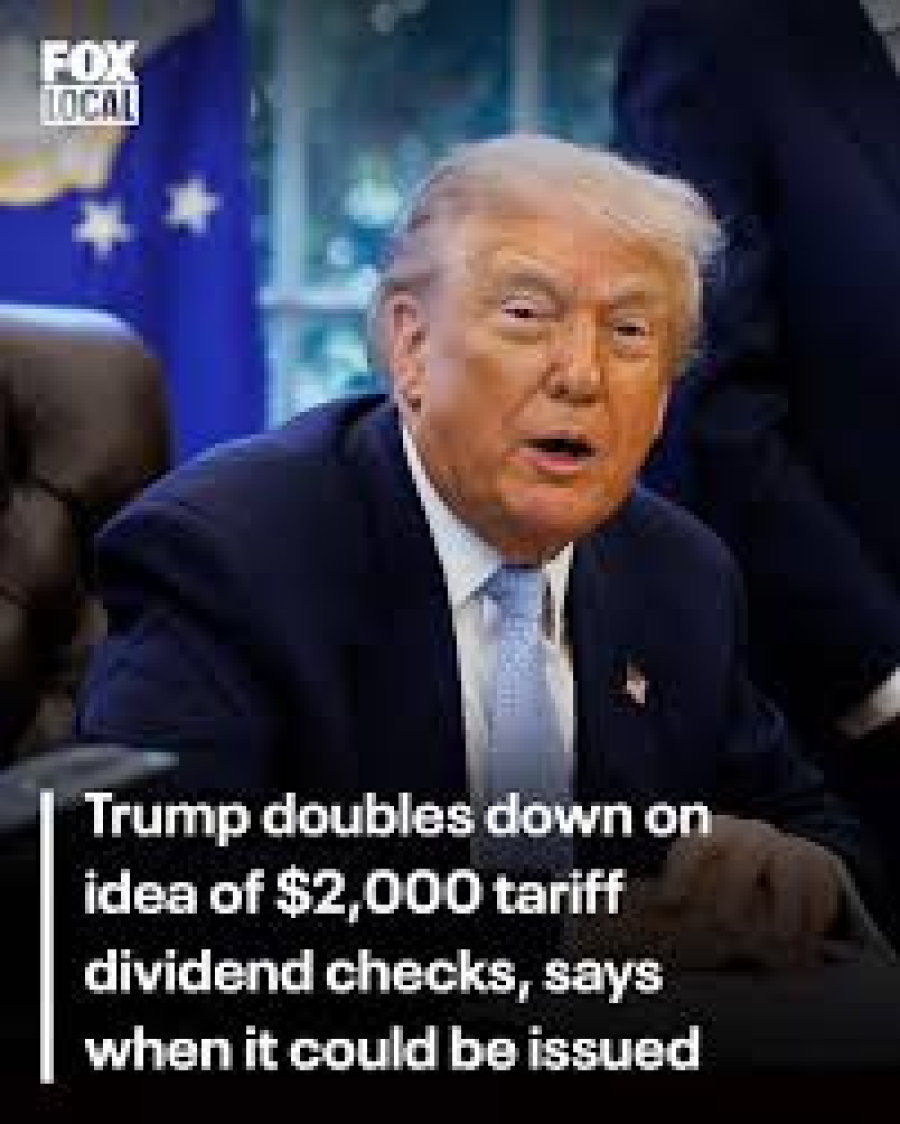
In the context of Douglas’ economic views, this press release addresses U.S. President Donald J. Trump announcing that he wants to tap into tariff revenue and issue a dividend check to low-income and middle-income American citizens.
TARIFFS: SOURCE OF PAYABLE PUBLIC DIVIDEND
According to Institute founder Dr. Oliver Heydorn, US President Trump’s announcement that he is strongly considering issuing approximately $2,000 dividends from import-tariff revenue to middle- and lower-income Americans has some merit.
Importantly, Douglas’ insights revealed that in the production cycle, the wages and salaries paid out to workers always fall short of, and fail to keep pace with, production costs. This leads to a chronic shortage of purchasing power in the economy. Modern, largely automated production easily produces plenty of goods and services, but there is insufficient direct purchasing power for consumers to buy that production, due to the gap created when such highly efficient production faces insufficient consumption capacity.
So, typically, most consumers must go into debt through credit cards, personal loans, home-equity loans and other means to try and bridge that gap. The “Douglas solution” is to instead fill the gap with newly created debt-free credit that is directly issued through an agency of government, not borrowed from the banking system.
“If Trump goes ahead with this 2,000-dollar dividend proposal (funded through tariff revenue), it is basically a tariff refund or rebate, to whatever extent that Americans pay tariffs due to increased prices on imported goods,” stated Dr. Heydorn, who has authored several books on Douglas’ social credit concepts.
While stressing that seeing a favorable aspect to Trump’s tariffs is not an endorsement of any particular political party or officeholder, Dr. Heydorn added:
“Such a dividend issuance establishes the principle that citizens can, under certain circumstances, receive compensatory monies from the government without directly having to work, or without being further publicly indebted for it. Citizens should be regarded as shareholders in the overall economy. Once the precedent is set, this arrangement can be modified and expanded in the direction of Douglas Social Credit.”
The Clifford Hugh Douglas Institute, based in Canada, has members and advocates in the United States, the United Kingdom, Australia and elsewhere.
