


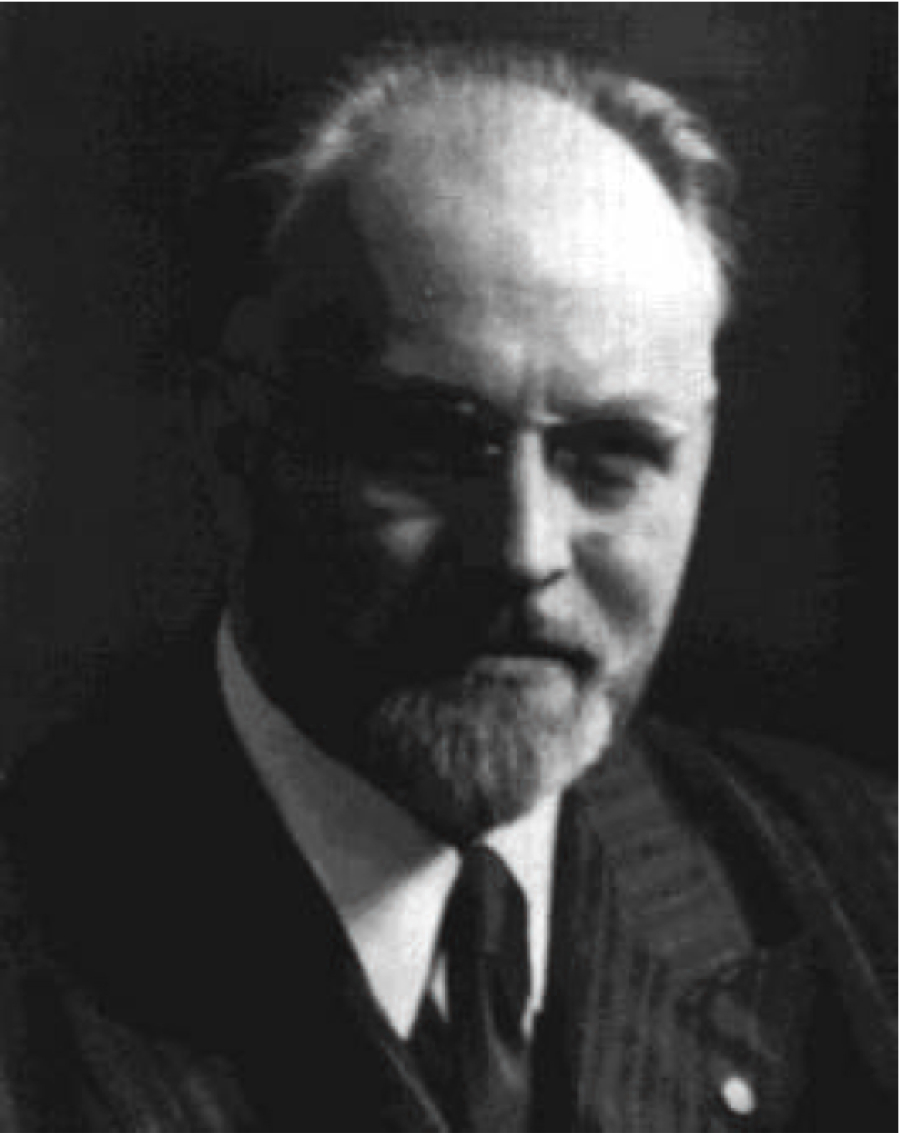
Elon Musk's Canadian Grandfather, Joshua Haldeman, was a full-fledged supporter of the anti-socialist, anti-totalitarian proposals for monetary reform known as Douglas Social Credit. He was even the National Chairman of the Canadian Social Credit Association and stood for election as a Social Credit candidate in the general election of 1945. Elon should take notice of his grandfather's interest in DSC ... if for no other reason than it would make getting to Mars that much easier and would ensure a constructive future for the whole of humanity.
In a letter labelled "Social Credit" to the editor of The Western Producer dated Sept. 13. 1934, "J.N. Haldeman, D.C., Ardill, Sask." wrote the following:
"Dear Sir: A system of social credit is absolutely necessary to both the capitalistic and socialistic countries to make it possible for the people to buy the goods that they are able to produce. Capitalistic Canada, in real wealth, is the richest country in the world per capita. We patch up our inability to distribute and use this great wealth by issuing 'charity' which is expected to be repaid to 1,2000,000 of our people. Each one of us can think of the many things that we need and would have if we had the money to buy them, while we pay to keep men on relief who are able and willing to produce these very articles. If we are willing to call a spade a spade there is not much doubt that people have died of malnutrition in this country of ours, and hundreds of horses died for lack of feed, while our 'visible' surplus of wheat equalled our year's export quota.
Socialistic Russia has reached second place in world industrial production and grew 3900 million bushels of grain last year, but we hear that five million died of starvation. Letters from Russia are not censored as strictly as from Germany and Italy and it is rather doubtful that such large numbers died of starvation. There is, however, sufficient reason to believe that many were hungry and that some may have died of starvation. They are able to and have just completed the largest canal in the world in 19 months (although the Canadian press did not see fit to consider this world achievement as news) and yet they are unable to properly feed and clothe all their people.
The inability of the people to make use of the abundance that surrounds them is the same in every country regardless of their type of government, with the possible exception of Japan. The solution for this distributive problem is in the books recommended by the Dean of Canterbury in his 'Sin of Poverty,' namely 'Economic Nationalism' by Maurice Colbourne, and 'This Age of Plenty' by C. Marshall Hattersley. We shall retrogress to chaos, dictatorship and slavery if we are not 3 willing to make full use of our productive capacity and advance to a millennium.
Sincerely,..."
Joshua Haldeman once gave an address over the CBC in 1948 entitled "Social Credit vs Communism" where he explains in great detail how Douglas Social Credit, as an economic system based on, or consonant with, Christian principles, would finally neutralize the Communist threat completely, whereas the conventional political parties (the Liberals and the CCF, forerunners of the NDP) were only ever adopting communist proposals (as enunciated in the communist manifesto) - see attached.
- Home
- About Us
- S C Theory
-
S C Action
- Social Credit News
-
Social Credit Views
- Social Credit in Summary
- The Economics of Social Credit in Summary
- The A+B Theorem
- The Bank Creation of Money Out of Nothing
- Social Credit and Usury
- Social Credit vs. a Basic Income
- Social Credit and Leisure
- Social Credit vs. Socialism
- Social Credit and Income Inequality
- Social Credit and War
- Social Credit and Catholicism
- Social Credit and Distributism
- Action FAQ
- Resources
- Publications
- Contact us
- Donate

