Social Credit News

Friday, 27 September 2019 00:04

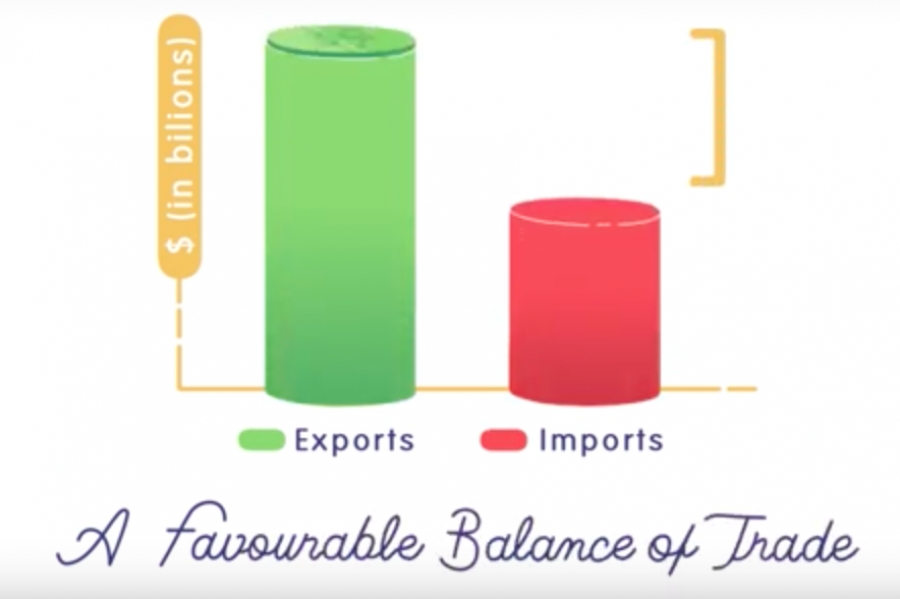
A Favourable Balance of Trade? - New Animated Video

Written by
Rate this item
(0 votes)

This is the first professional animated presentation of one key aspect of the Douglas or British Social Credit case (not to be confused with Chinese 'Social Credit'): the folly of 'favourable' trade balances under the existing financial system, where physical loss and inefficiency are financially rewarded.

Please comment and share widely.

Media

A Favourable Balance of Trade?

Leave a comment

Make sure you enter all the required information, indicated by an asterisk (*). HTML code is not allowed.

1 comment

  • Comment Link Anon Sunday, 29 September 2019 17:00 posted by Anon

    In English speaking countries, central banks now have a policy of "low interest rates" (The Official Cash Rate etc). This is part of a global trend resulting in "negative interest rates". Why the low interest rates? And how do such low central bank interest rates gel with the Douglas social credit analysis?

    Do constant retail sales merely reflect the deficiency of purchasing power as revealed in the A+B theorem?

    The Social Credit discussion group is no longer available online. Do you have an update, please?

    Thank you.

Latest Articles

  • The Accounting of Abundance: A Structural Critique of Inflationary Theory
    Mainstream economic thought treats inflation as a phenomenon of monetary volume—the "Too Much Money" paradigm. However, by applying the engineering logic of C.H. Douglas’s A+B Theorem, we can deduce that inflation is not primarily a result of consumer behaviour, but a mathematical consequence of debt-based cost accounting in an industrial society.
    Written on Saturday, 14 February 2026 12:56 Read more...
  • A Douglas Social Credit Critique of Gesell’s Monetary Analysis and Proposals
    Silvio Gesell believed that the two great economic evils were stagnation and inequality. He attributed stagnation to hoarding (the “retention” of money that slows circulation) and inequality to both hoarding and the payment of interest on money. His remedies were therefore twofold: demurrage (a carrying charge that makes money lose value if held, forcing it into rapid circulation) and interest-free credit. From a Douglas Social Credit standpoint, Gesell’s take on monetary reform rests on a fundamentally flawed diagnosis and thus the remedies he proscribes are inadequate, in addition to being coercive and counterproductive.
    Written on Tuesday, 10 February 2026 14:00 Read more...
  • THE THEOLOGY OF THE INHERITANCE: A Social Credit Synthesis of Patristic Thought and Economic Reality
    Social Credit stands alone in its pursuit of the Economics of Grace. It recognizes that the "price" of our life has been paid by the gifts of God and the genius of our ancestors. By replacing the bondage of the gold standard and the indignity of the Job Guarantee with the National Dividend and the Price Discount, we move from an "Economics of Toil" to an Economics of Leisure.
    Written on Tuesday, 10 February 2026 07:54 Read more...